
 Product
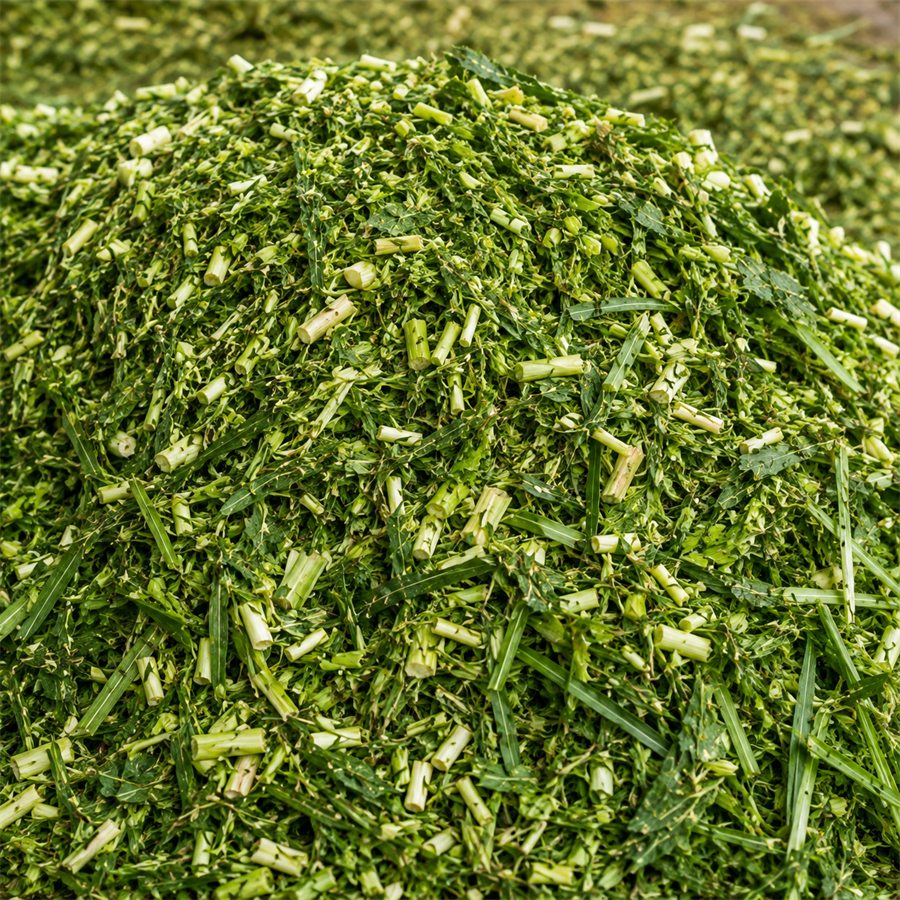
Chopped green fodder
Cut at 45 days, chopped to 15–25 mm and dispatched the same day. Sold by the tonne on a standing or delivered basis.
DairyGoateryGaushala
160 acres of Super Napier and CO‑5 hybrid fodder — planted once, cut eight times a year, and processed into feed, fuel and fertiliser.
Napier grass (Cenchrus purpureus, formerly Pennisetum purpureum) is a tall perennial C₄ grass that we plant once and harvest for three to four years. It is the highest biomass producer we can grow here — 250 to 300 tonnes of green fodder per hectare per year across eight cuts, against roughly 100 tonnes for a seasonal fodder crop.
It also does structural work on the farm. The deep, fibrous root mat holds our sloping blocks through the monsoon, the perennial cover keeps soil temperature down, and the crop absorbs the dairy slurry and corn-residue compost that would otherwise need disposal.
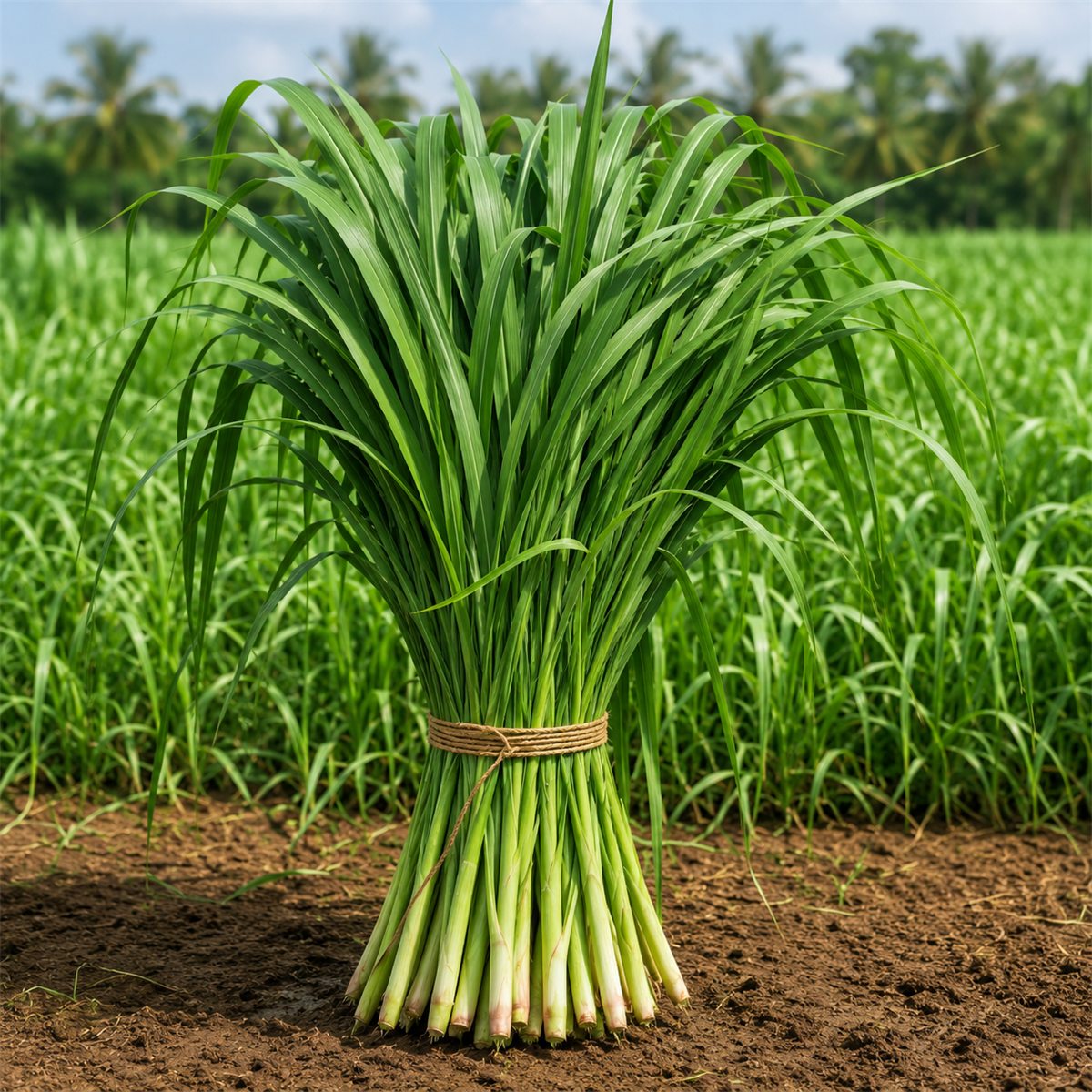
Establishment takes a season. After that the work is cutting, feeding and weeding on a 45-day rhythm.
Two ploughings and one harrowing, then ridges at 60 cm. Because the stand will sit for four years, we correct the block properly at this stage — 25 tonnes per hectare of farmyard manure and compost incorporated, and a full soil test to fix pH and phosphorus before anything is planted.
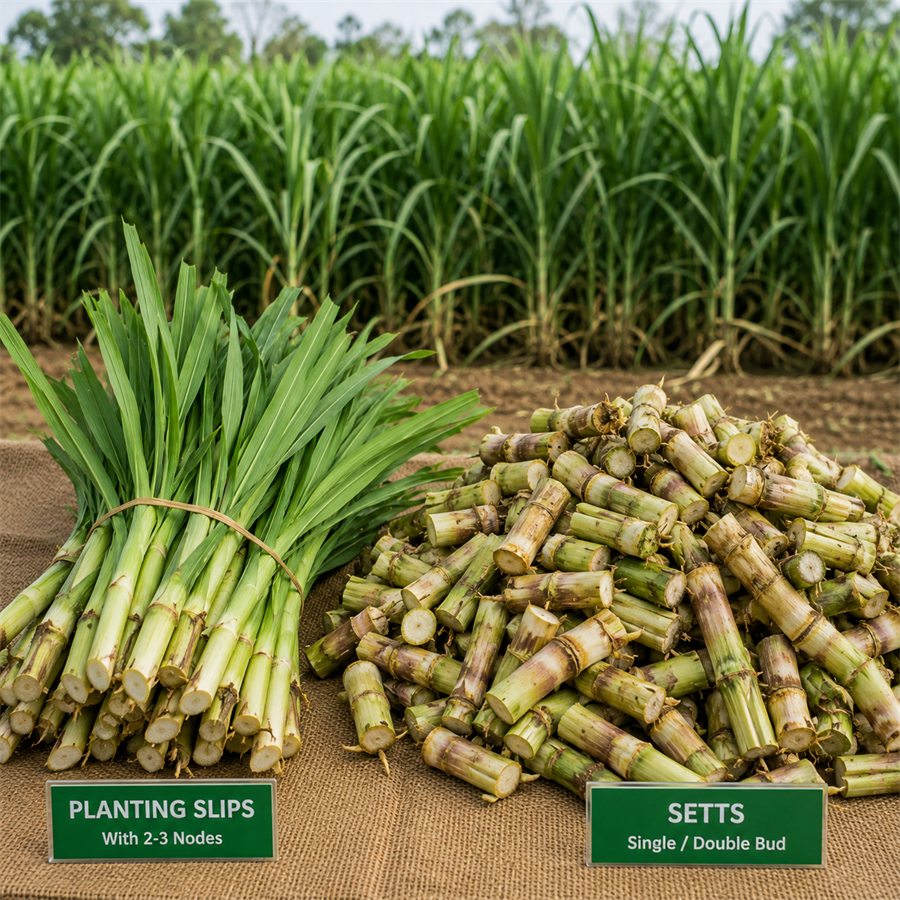
Napier hybrids set little viable seed, so the crop is propagated vegetatively. We use three-node stem cuttings taken from 90–120 day old canes, or root slips from established clumps — roughly 27,000 setts per hectare, planted at a 45° angle with two nodes below the soil.
Best planted with the onset of the monsoon in June–July, or in February under assured irrigation. Gap filling is done in the third week. The block needs to stay weed-free for the first 45 days — after canopy closure Napier suppresses weeds on its own.
A basal dose of 50:50:40 NPK kg/ha at planting, then 40 kg of nitrogen per hectare after every single cut — nitrogen is what drives regrowth and crude protein. Dairy slurry and vermicompost from our own residue line cover a large part of that requirement.
Weekly irrigation in summer, fortnightly in winter, and only supplemental water during the monsoon. Drip laterals run along the ridge. Napier tolerates dry spells but crude protein falls sharply if the crop is stressed through a regrowth cycle.
First cut at 70–75 days, then every 40–45 days — eight cuts a year. Cut 10–15 cm above ground so the crown and buds survive; cutting too low kills tillers, cutting too late pushes fibre up and protein down. Height at cutting is around 1.5–2 m.
Cut fodder goes straight to the chaff cutter and is chopped to 15–25 mm. Chopping cuts refusal, improves rumen efficiency and is essential if the material is going into silage. Fresh fodder is dispatched the same day.
After each cut the stubble is raked, gaps are filled, and the block is fertigated within 48 hours. Yield holds well for three years and starts declining in the fourth — at which point the block is ploughed out, rested under a legume, and replanted.
| Cut | Days after previous | Season | Green yield (t/ha) | Crude protein | Routed to |
|---|---|---|---|---|---|
| Cut 1 | 70–75 (from planting) | September | 32 | 9.8% | Green fodder |
| Cut 2 | 45 | October – November | 38 | 10.4% | Green fodder + silage |
| Cut 3 | 45 | December | 34 | 10.1% | Silage |
| Cut 4 | 45 | January – February | 28 | 9.2% | Silage + hay |
| Cut 5 | 42 | March | 30 | 9.6% | Green fodder |
| Cut 6 | 42 | April – May | 36 | 10.2% | Green fodder + TMR |
| Cut 7 | 40 | June – July | 42 | 11.1% | Green fodder |
| Cut 8 | 40 | August | 40 | 10.8% | Silage + biomass |
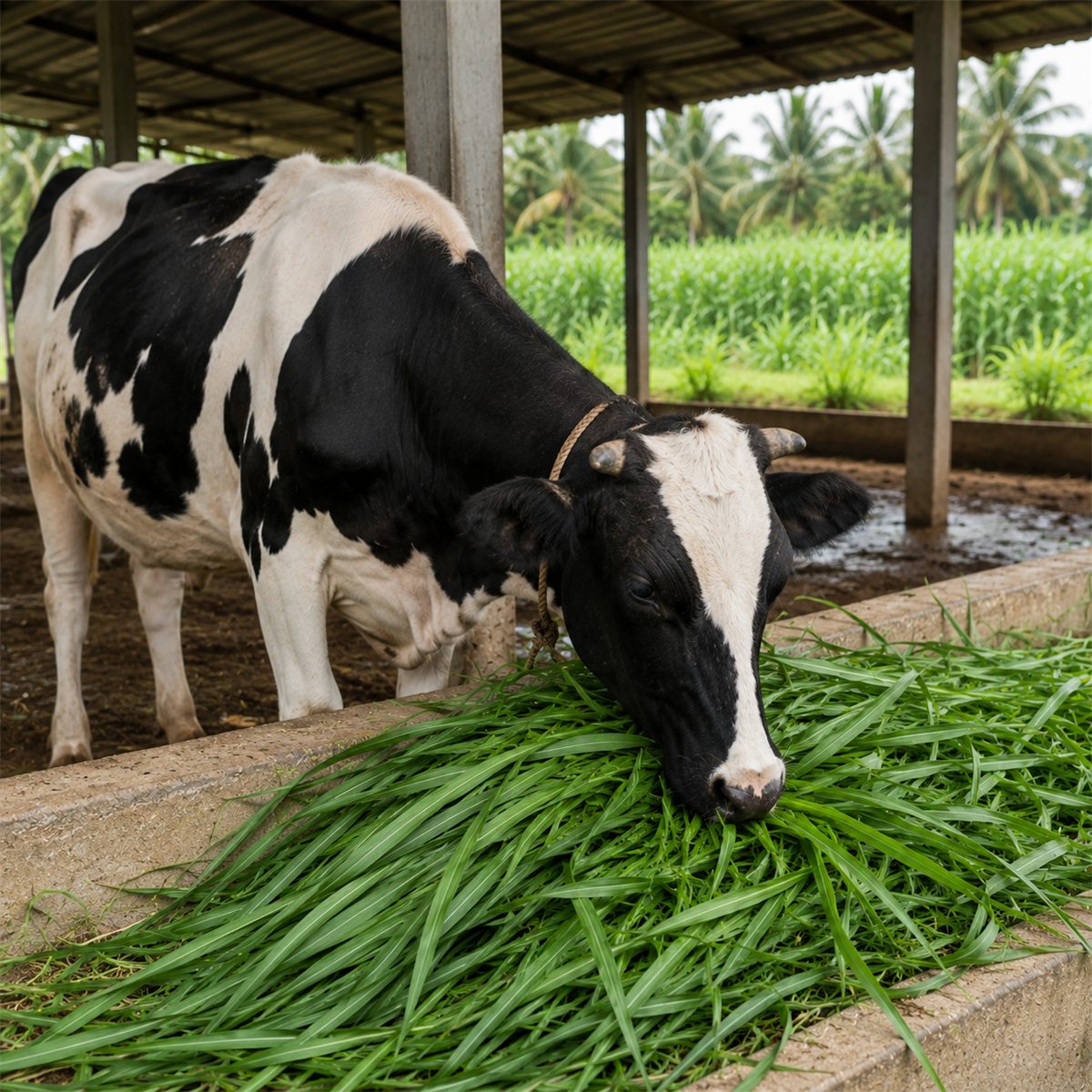
Values below are from our in-house lab, averaged across the 2025–26 cuts and reported on a dry-matter basis. Cutting age is the single biggest lever: harvest at 45 days and protein holds near 10%, let it run to 70 days and it drops under 7% while fibre climbs.
| Parameter | Napier (45-day cut) | Napier silage |
|---|---|---|
| Dry matter | 18–22% | 28–32% |
| Crude protein | 9–11% | 8–9% |
| Crude fibre | 30–34% | 32–35% |
| Total digestible nutrients | 55–60% | 54–58% |
| Oxalate | 2–3% | < 2% |
| pH after fermentation | — | 3.8–4.2 |
Product
Cut at 45 days, chopped to 15–25 mm and dispatched the same day. Sold by the tonne on a standing or delivered basis.
 Product
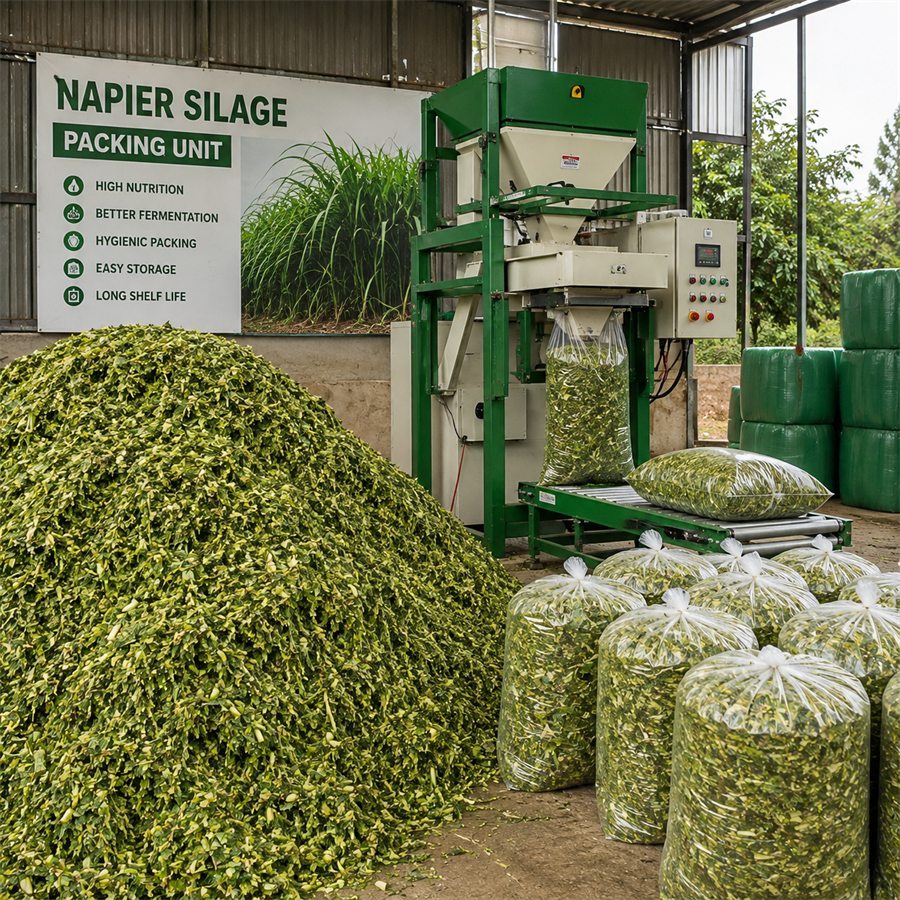
Wilted to 30% dry matter, inoculated with lactic acid bacteria and vacuum-baled in 50 kg units. Stable for 12 months unopened.
 Product
Three-node cuttings and root slips of Super Napier, CO‑5 and CO‑6, cut to order from 90–120 day canes and dispatched within 24 hours.
 Product
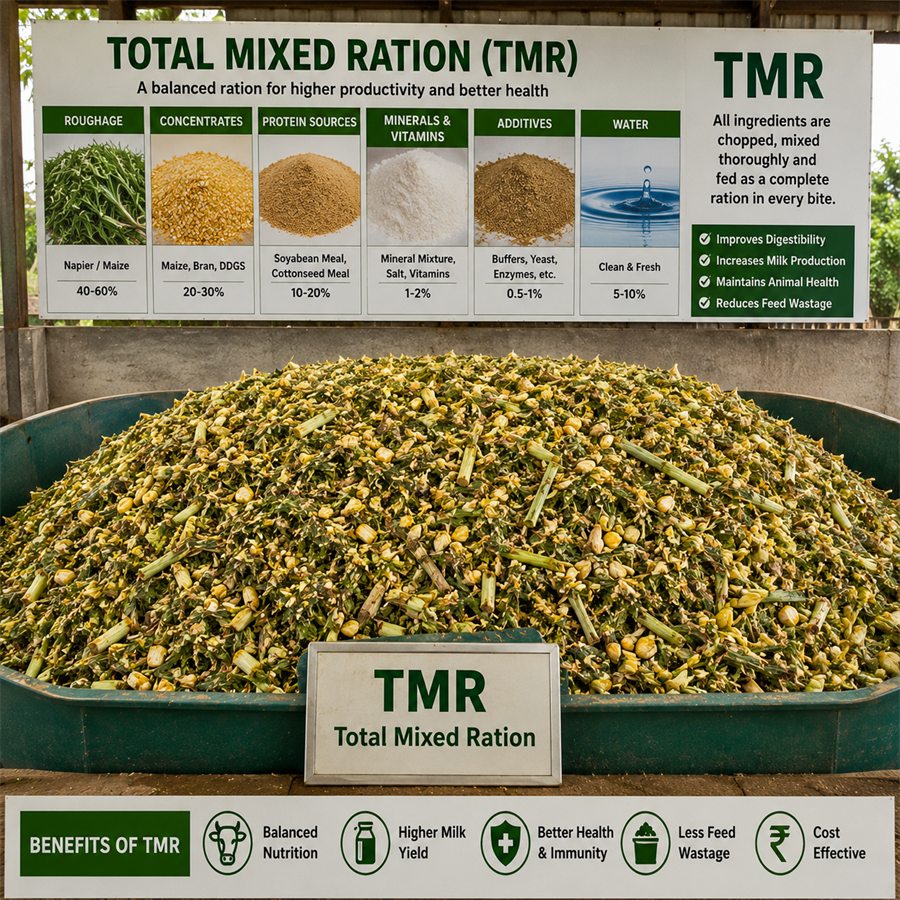
Napier silage blended with maize silage, corn gluten feed and mineral mix to a balanced ration, supplied as loose feed or compressed blocks.
Stubble, over-mature canes, leaf trash and the surplus of a heavy monsoon cut all have a route off the farm.
 By-product 01
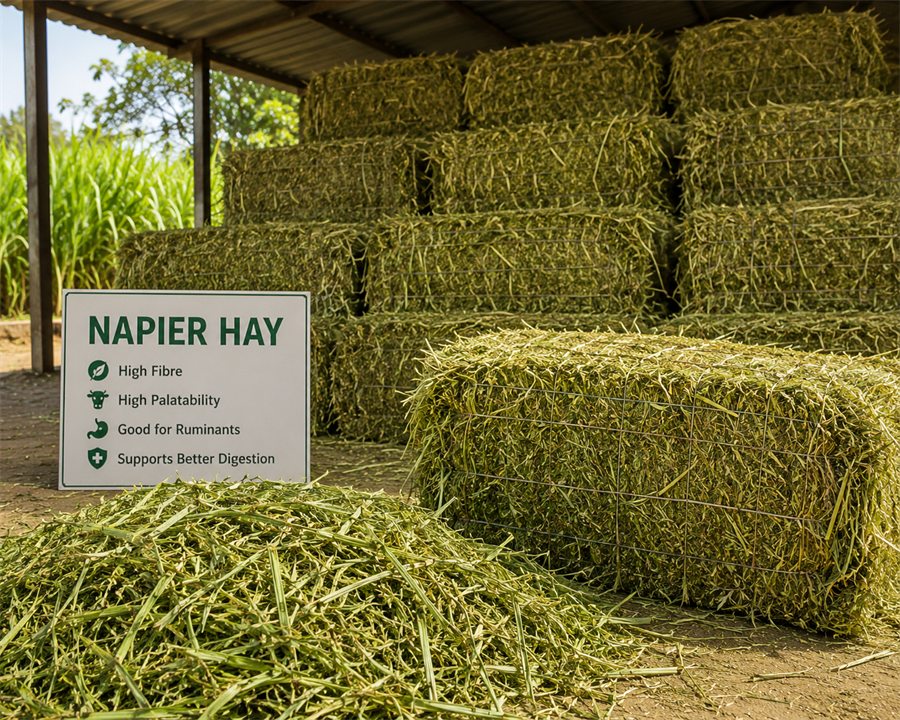
Surplus from the cool-season cuts sun-dried to 12–14% moisture and baled. Lower protein than fresh fodder but it stores through the dry months without a silo.
 By-product 02
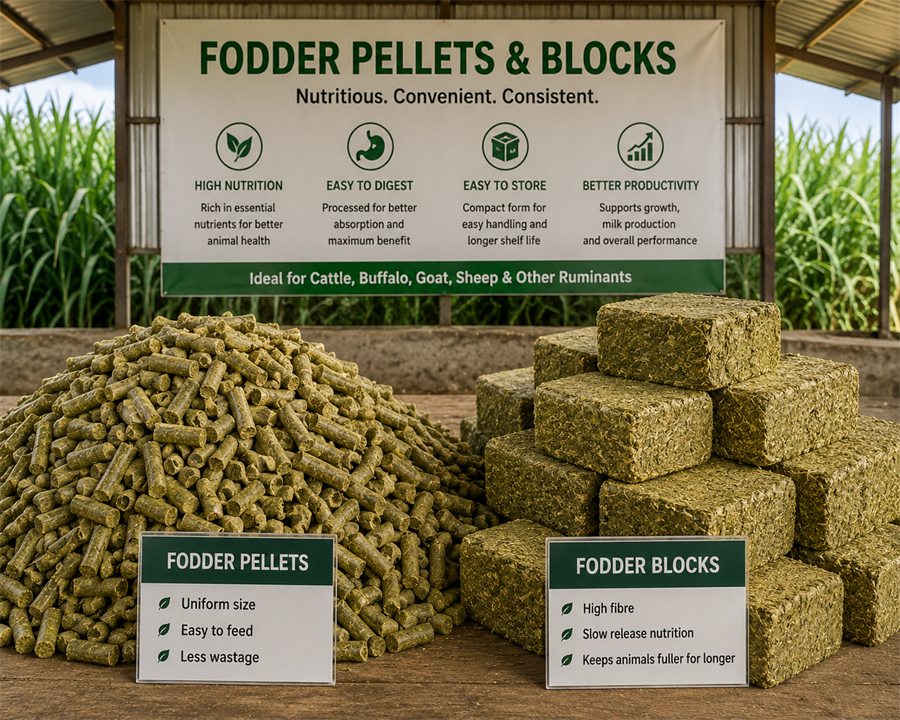
Dried, hammer-milled Napier bound with molasses and urea into densified pellets or blocks — roughly a fifth of the volume of loose fodder to move.
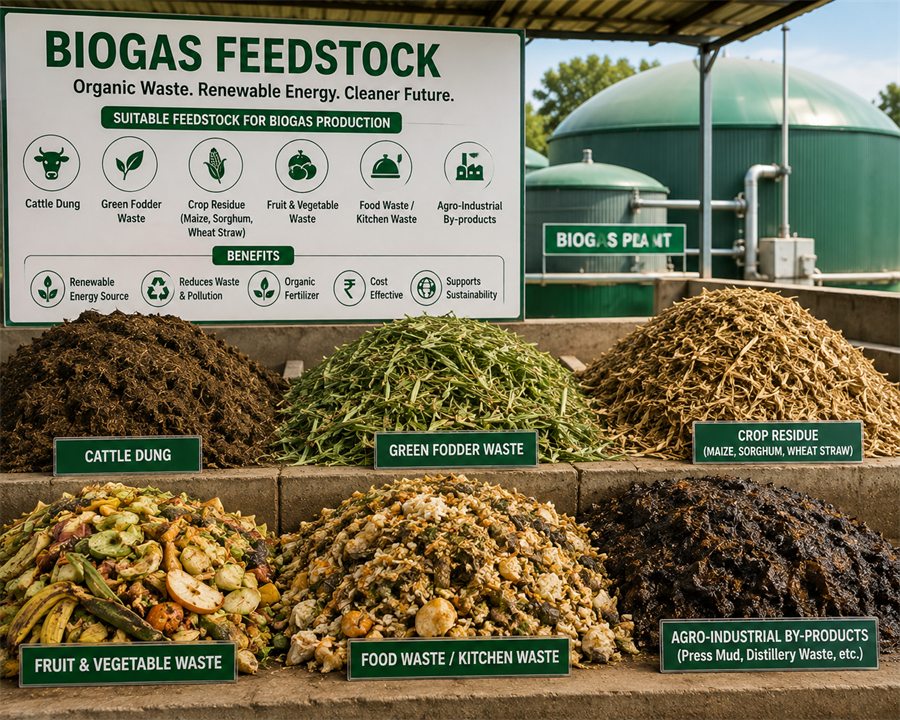 By-product 03
Over-mature canes and chopping-floor trash go into the anaerobic digester — roughly 60–70 m³ of biogas per tonne of fresh matter, running the farm's dryer and kitchen.
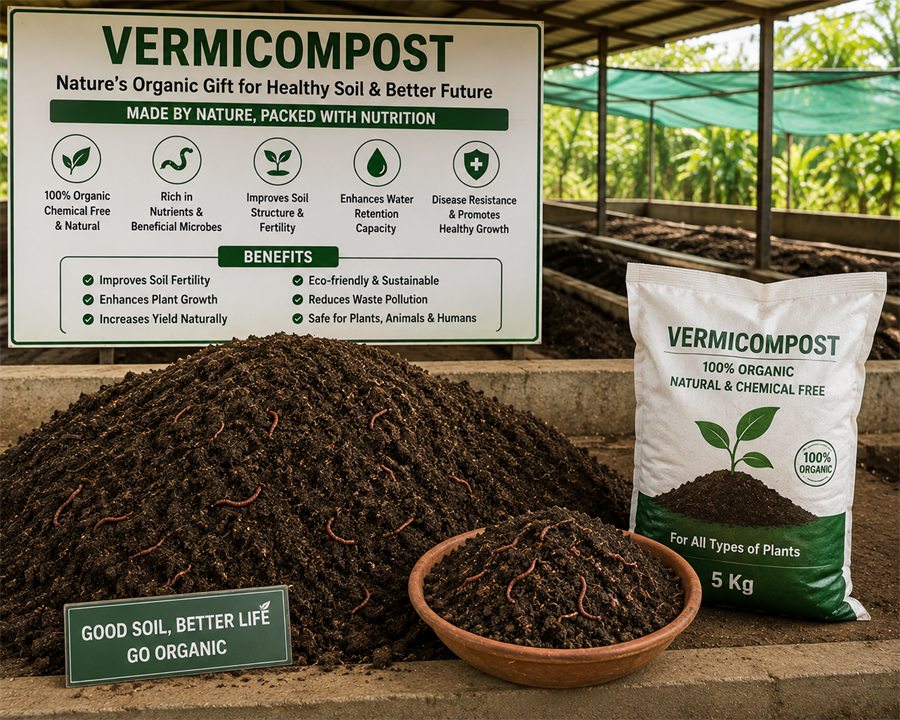 By-product 04
Leaf trash and digestate composted with Eisenia fetida over 60 days. Around 1.6% N, 0.9% P and 1.4% K — most of it goes straight back onto the maize blocks.
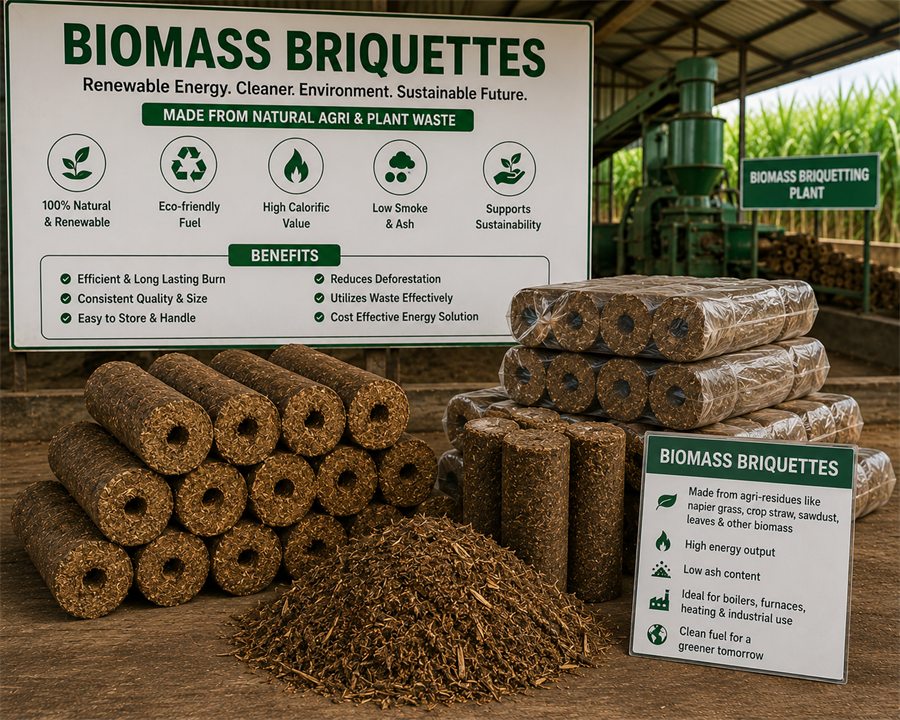 By-product 05
Dried stalk fibre compressed into briquettes at about 4,000 kcal/kg — a drop-in replacement for coal in small boilers and brick kilns.
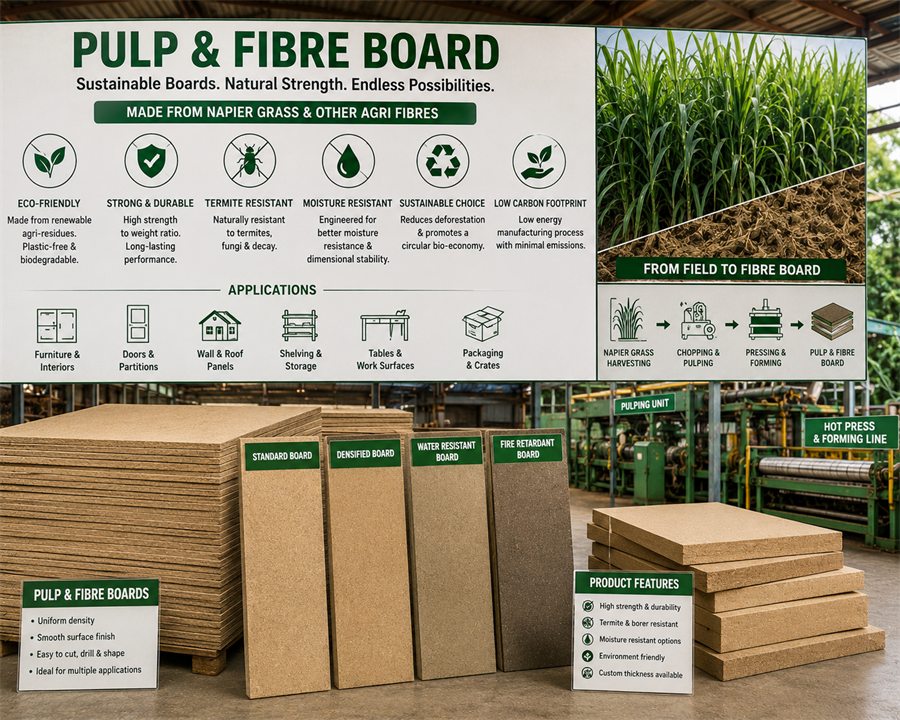 By-product 06
The long bast fibre in mature canes pulps well. We supply baled cane to a regional mill making handmade paper and low-density particle board.
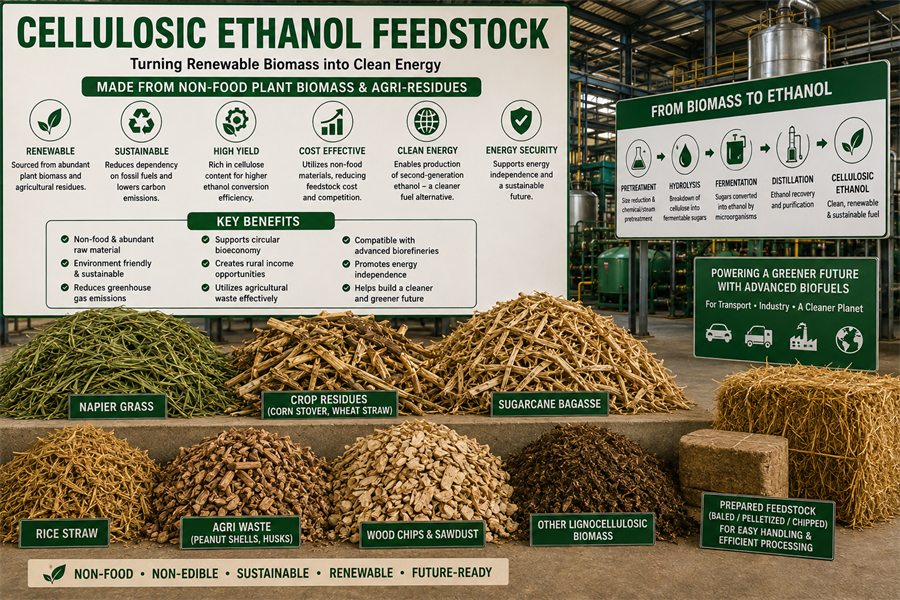 By-product 07
High-lignocellulose mature Napier supplied as second-generation ethanol feedstock — a research-scale offtake, but a growing one.
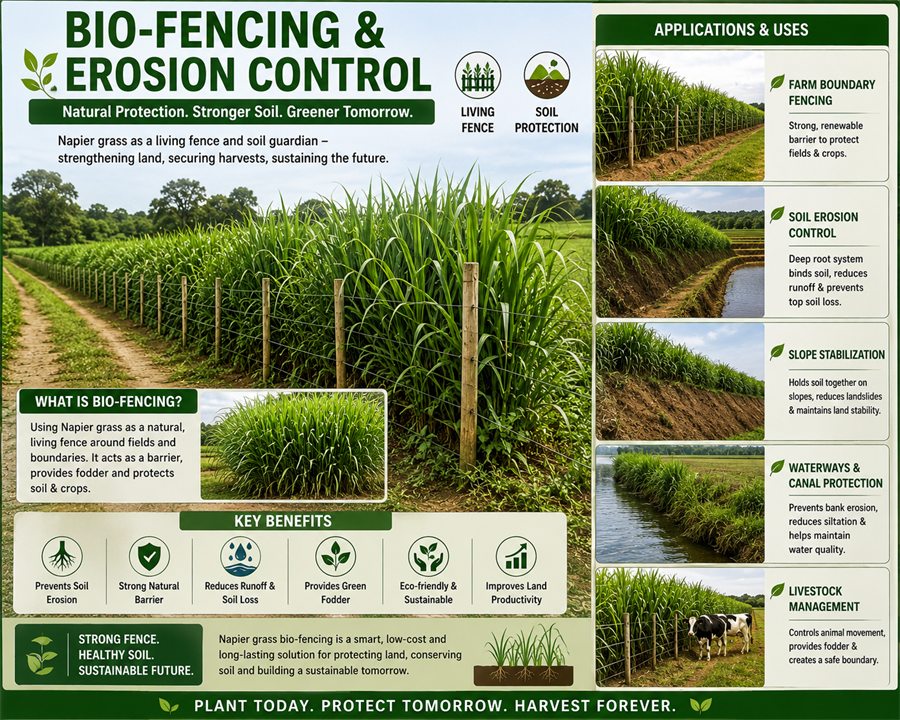 By-product 08
Rooted clumps sold as living border plantings — a dense wind barrier that holds bunds and channel banks against monsoon runoff.
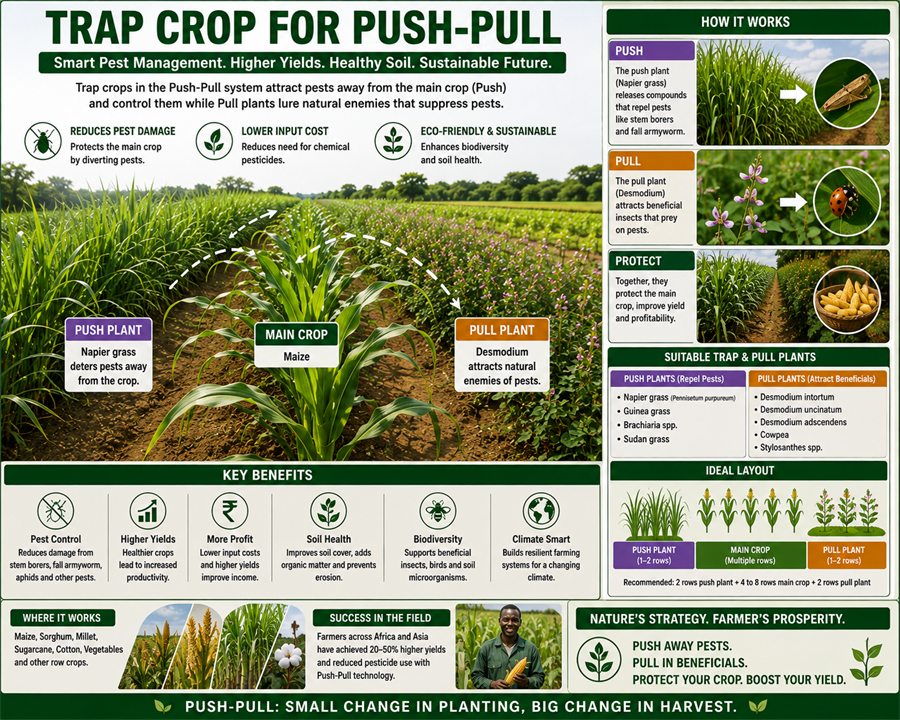 By-product 09
Napier borders around the maize blocks pull stem borer and fall armyworm moths away from the crop. It cuts our spray rounds and the borders still get cut for fodder.
Tell us the herd size or the acreage you are planting and we will work out quantities and a cutting schedule that fits.