
 Product
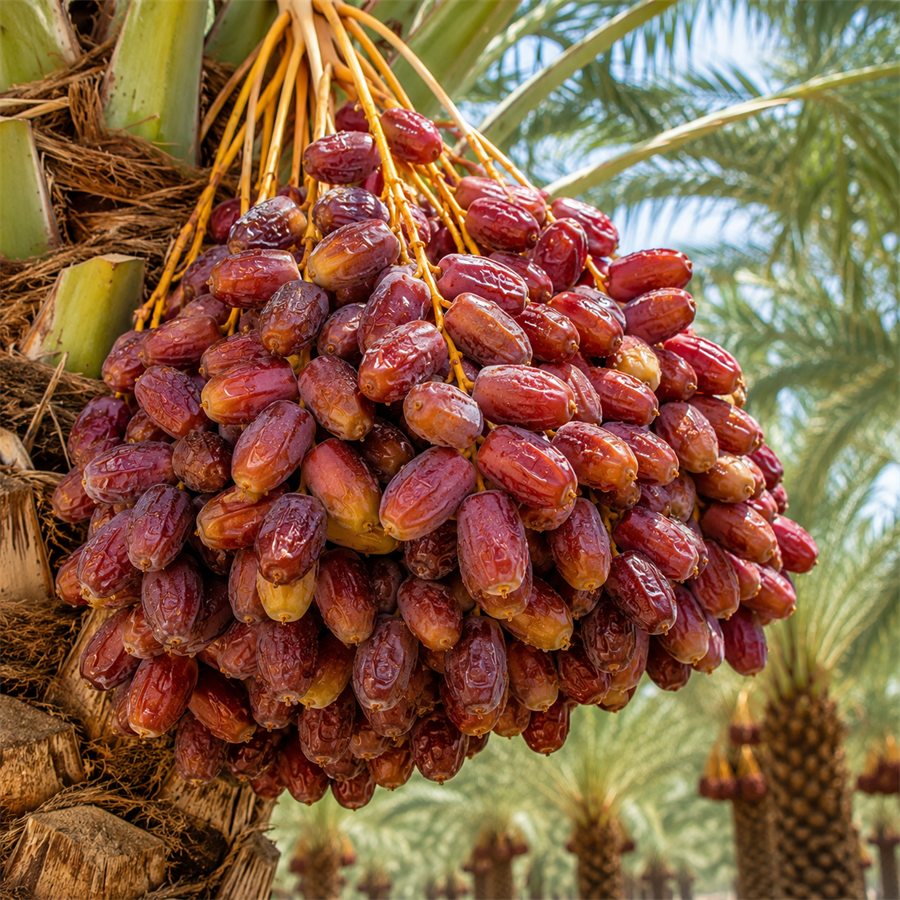
Fresh dates (khalal)
Barhi picked crisp and yellow at colour break, stripped or sold on the strand, and into cold store within twelve hours of the cut.
Fresh retailModern tradeExport
180 acres of date palm under drip irrigation — a perennial that carries fruit for four decades, and gives up a saleable stream from every part it sheds.
The date palm (Phoenix dactylifera) is the longest-horizon crop on the farm. A palm planted today gives its first commercial bunch in year four, reaches full bearing around year eight, and keeps yielding for forty years or more. It is also the only crop we grow that thrives on heat, salinity and hard water — conditions that would write off the maize blocks.
The garden sits in the arid Rayalaseema zone, where the dry pre-monsoon months line up with fruit ripening. That is the whole agronomic argument for dates here: the fruit must colour and cure in dry air. Rain on a ripening bunch splits and ferments the fruit, so our entire calendar is built around finishing the harvest before the south-west monsoon arrives.
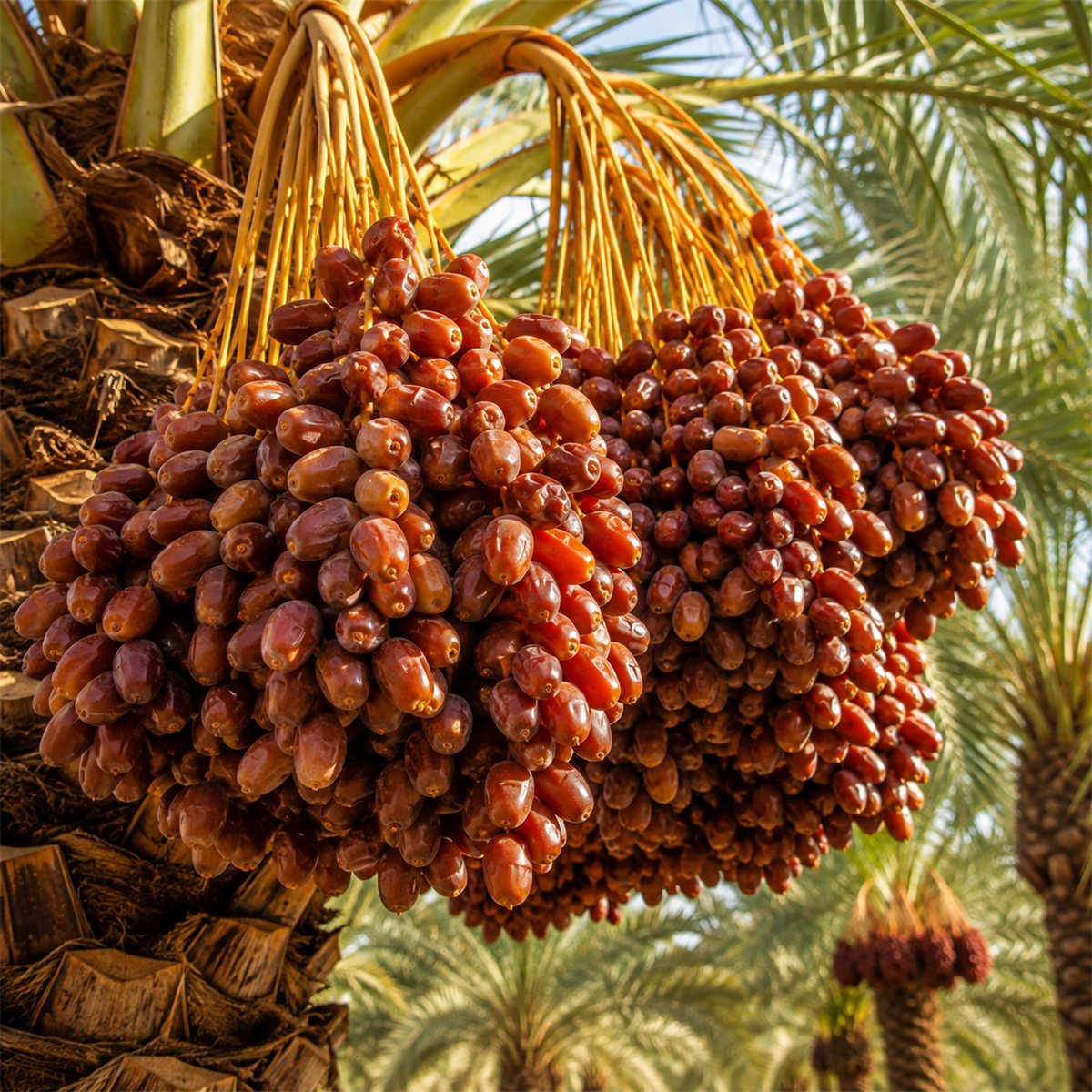
An annual cycle of pollination, bunch work and harvest, run on a perennial stand that is managed rather than replanted.
Pits of 1 × 1 × 1 m are dug on an 8 × 8 m grid and left open to the sun for a fortnight. Each pit is refilled with topsoil mixed with 40–50 kg of farmyard manure, 2 kg of single super phosphate and neem cake, then flooded to settle before planting.
Tissue-culture Barhi saplings go in at the start of the season, planted so the bud sits just above soil level, shaded for the first summer and irrigated daily. Offshoots taken from our own mother palms are rooted separately for a year before they are set out.
Four drippers per palm, stepping up to six as the canopy fills — roughly 60 litres a day in winter and 220 in May. Nutrients go through the line: nitrogen and potash split across six doses, with the heaviest potash draw during fruit filling, when potassium sets fruit size and sugar.
Dry and lowest-tier fronds are cut back once a year, keeping roughly nine green fronds for every bunch the palm is asked to carry. Thorns on the lower petioles are trimmed before pollination so the crews can work the crown safely, and offshoots are separated at three years for the nursery.
Date palms are dioecious, so fruit set is our job, not an insect's. As female spathes split, two or three strands of fresh male flowers are inserted and tied into each inflorescence, or pollen is dusted with a blower. Pollen is collected from our own male palms, dried and stored cold, and every palm is worked twice a week through the window.
About a third of the strands are removed from each bunch and the tips shortened, so the palm carries eight to ten bunches of even, full-sized fruit rather than a heavy set of small ones. Bunches are then bent down over a frond to take the strain, and bagged in mesh or paper sleeves against birds, dust and early rain.
Red palm weevil is the one that kills palms outright, so we run pheromone traps across the blocks, seal every pruning cut, and inject only where a trap catch and a crown check agree. Rhinoceros beetle, lesser date moth and fruit-stage bird damage are the rest of the watch list.
Bunches are cut in three or four passes as the fruit reaches the stage each buyer wants. Fresh khalal fruit is stripped, washed, graded and moved into cold store within twelve hours; the rest is ripened or dehydrated at 45–50 °C, graded, and packed under vacuum or modified atmosphere.
A date is not picked at one moment of ripeness. Each stage after pollination is a distinct product with its own moisture, sugar profile and buyer.
| Stage | Days after pollination | Appearance | Moisture | What we do with it |
|---|---|---|---|---|
| Hababouk | 0 – 20 | Tiny, cream, still in the spathe | — | Strand thinning and bunch bending |
| Kimri | 20 – 90 | Hard, green, sour | 80–85% | Bagging; no harvest |
| Khalal (Doka) | 90 – 130 | Full size, yellow or red, crisp and sweet | 50–55% | Fresh dates — graded and cold-chained |
| Rutab | 130 – 150 | Browning from the tip, soft, high sugar | 30–40% | Soft dates — packed or cured on |
| Tamar | 150 – 180 | Fully ripe, dark, shrivelled skin | 18–22% | Cured dates, paste, syrup and chhuhara |
| Window | Operation | Labour | Why it matters |
|---|---|---|---|
| December – January | Frond pruning, de-thorning, offshoot separation | Peak | Opens the crown for pollination and nursery stock |
| February – March | Spathe emergence and hand pollination | Peak | Sets the entire year's crop; missed spathes bear nothing |
| March – April | Fruit set, strand thinning, bunch bending | High | Fixes fruit size and stops bunch snap |
| April – May | Bunch bagging, peak irrigation | Moderate | Bird and dust protection through the hottest weeks |
| June – July | Khalal and rutab harvest, 3–4 passes | Peak | The fresh-market window, at the best price of the year |
| July – early August | Tamar harvest, dehydration, grading, packing | Peak | Must close before the monsoon breaks over the blocks |
| August – November | Basin repair, manuring, compost incorporation | Low | Builds the reserves the palm draws on next February |
The bunch that leaves the palm is stripped, sorted and split into streams — and the parts that are not fruit have buyers of their own.
Product
Barhi picked crisp and yellow at colour break, stripped or sold on the strand, and into cold store within twelve hours of the cut.
 Product
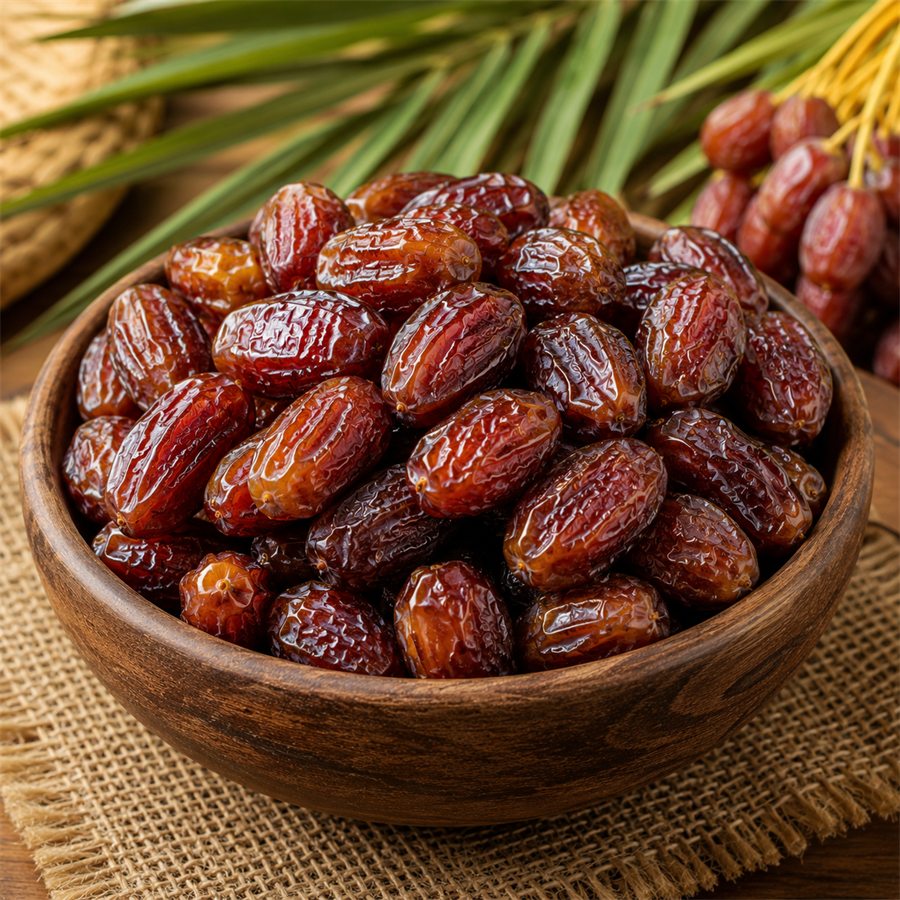
Rutab and tamar fruit ripened down to 18–22% moisture, hand-graded and packed under vacuum or modified atmosphere.
 Product
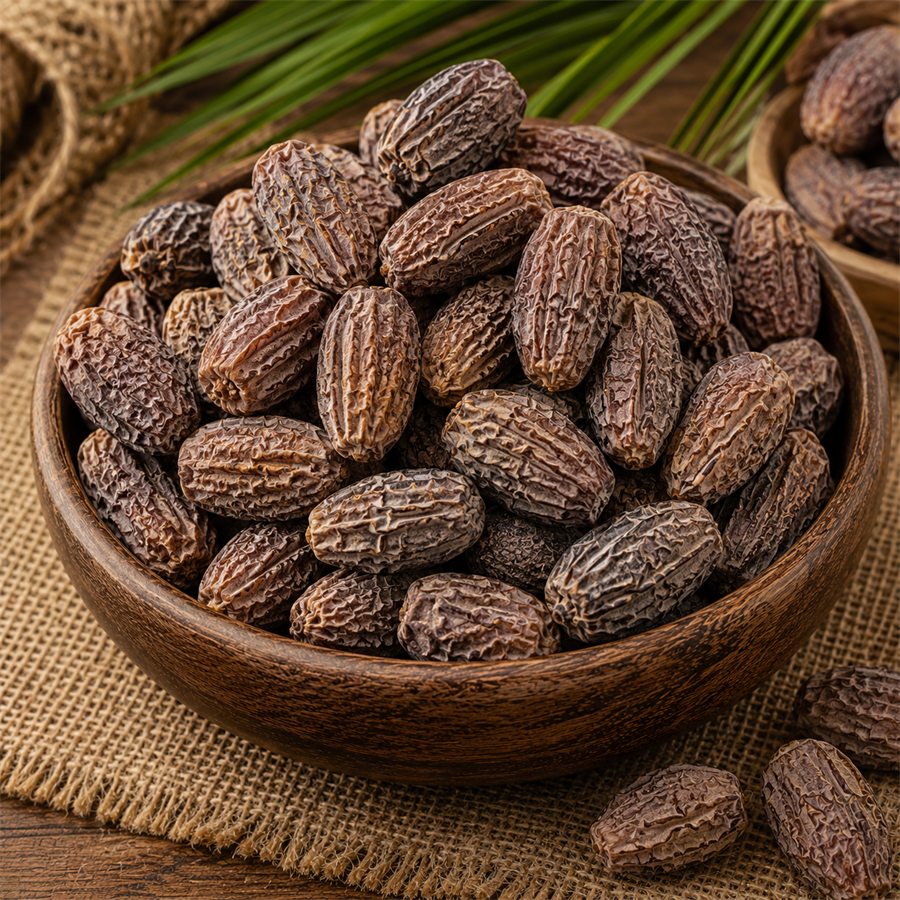
Fruit taken all the way down to 8–12% moisture and hardened — the shelf-stable grade the domestic wholesale and ritual trade runs on.
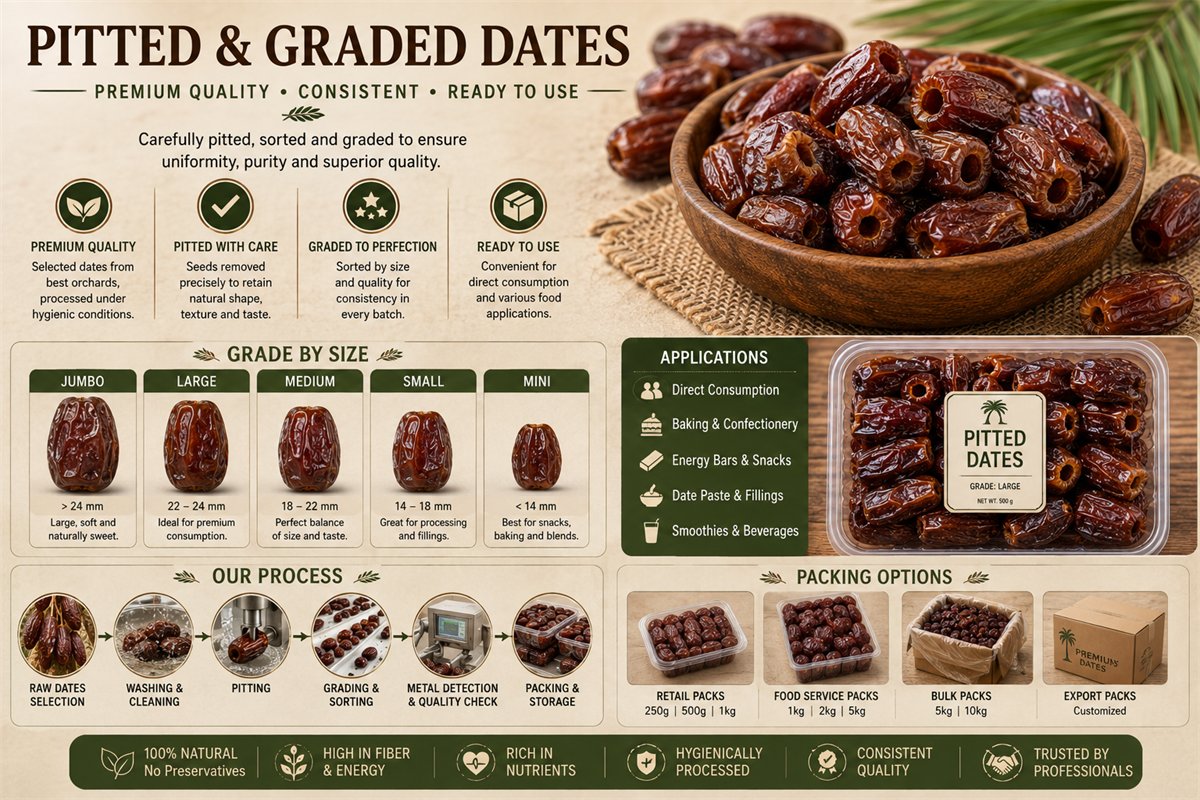 Product
Mechanically pitted, size-graded and packed for buyers who take fruit straight into a bakery, bar or filling line.
Fruit that will not make a retail grade, the pits, and everything the palm sheds in a year of pruning — all of it is sorted and sold rather than burned.
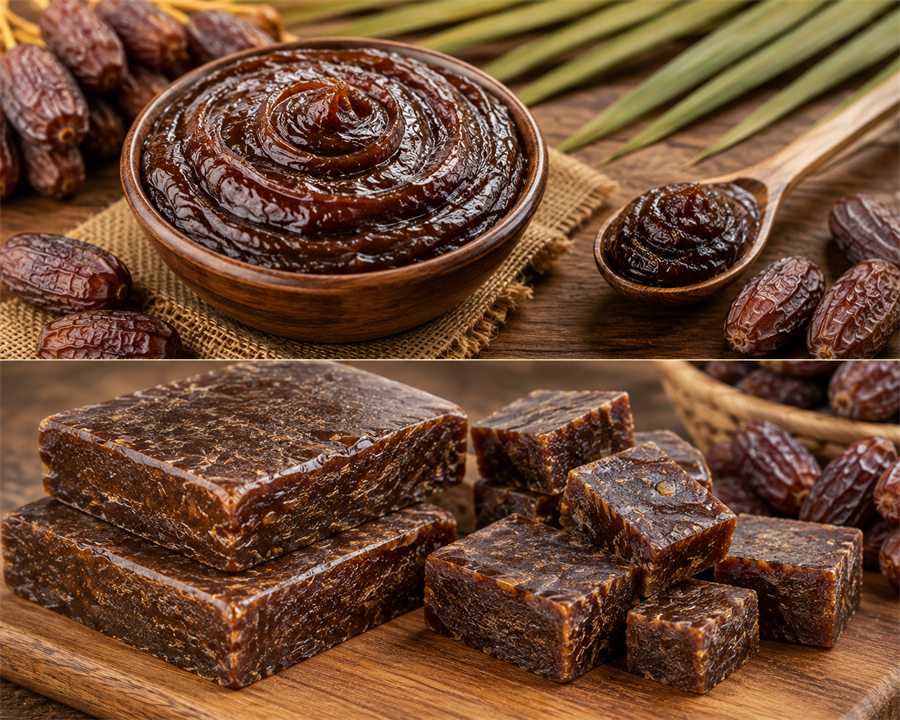 By-product 01
Soft fruit that is misshapen or off-grade is pitted, macerated and formed into homogenised paste and pressed blocks — the single largest processed stream.
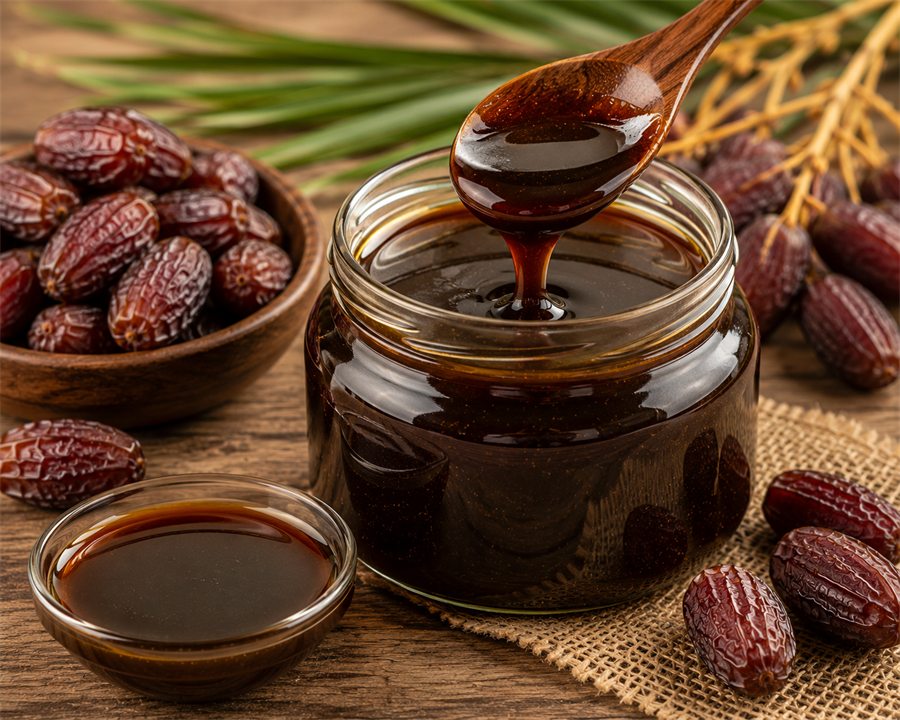 By-product 02
Fruit extracted in hot water, clarified and vacuum-concentrated to about 72 Brix. Sold as a whole-food sweetener with the mineral and phenolic load of the fruit intact.
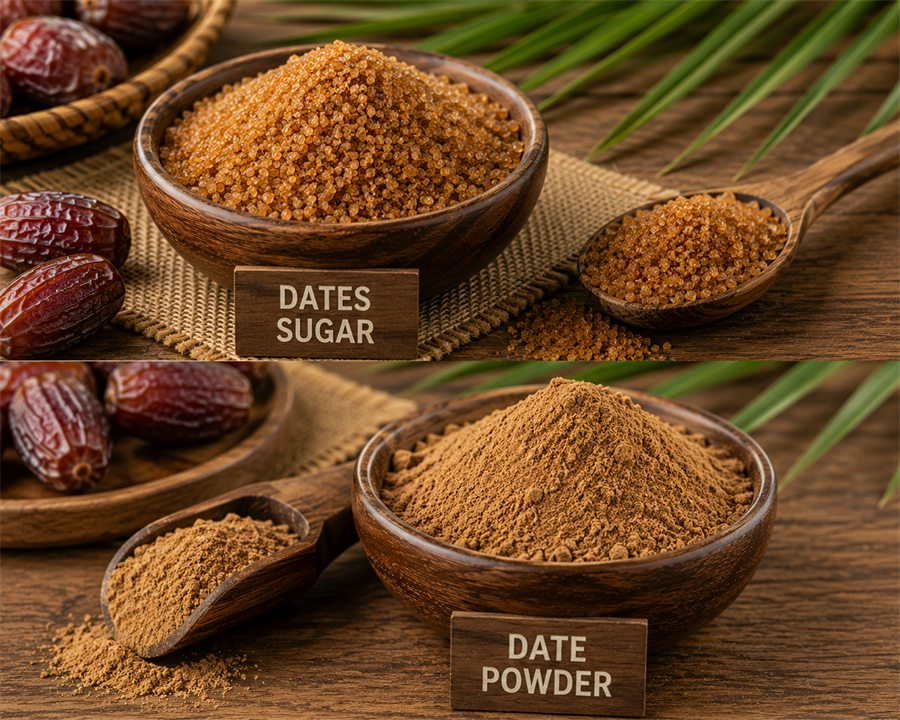 By-product 03
Dried fruit milled to a free-flowing powder, and a coarser granulated date sugar. Both carry the fibre and potassium that refined sugar does not.
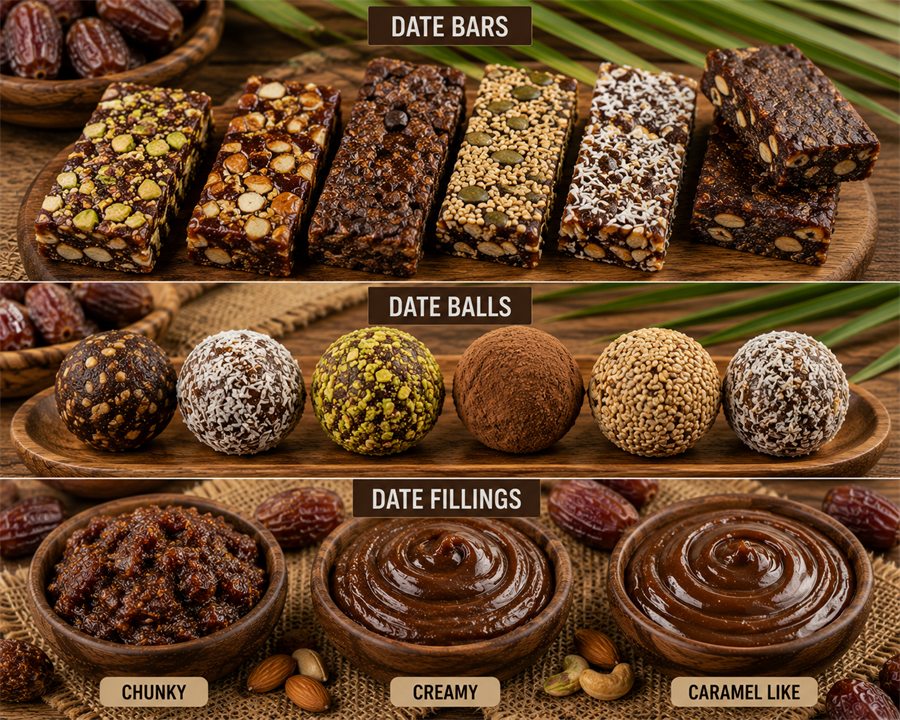 By-product 04
Paste blended with nuts, seeds and coconut into finished snack formats, produced on contract for brands that want a no-added-sugar label.
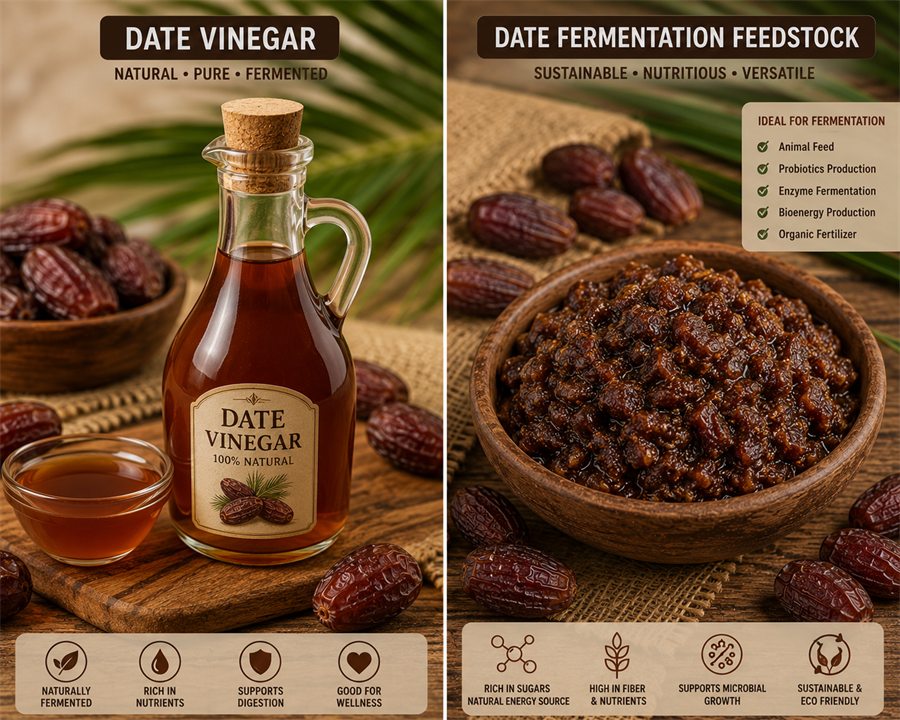 By-product 05
Low-grade fruit and press residue run to a sugar liquor of 15–18% — fermented into date vinegar, or sold as a carbon source to yeast and organic-acid fermenters.
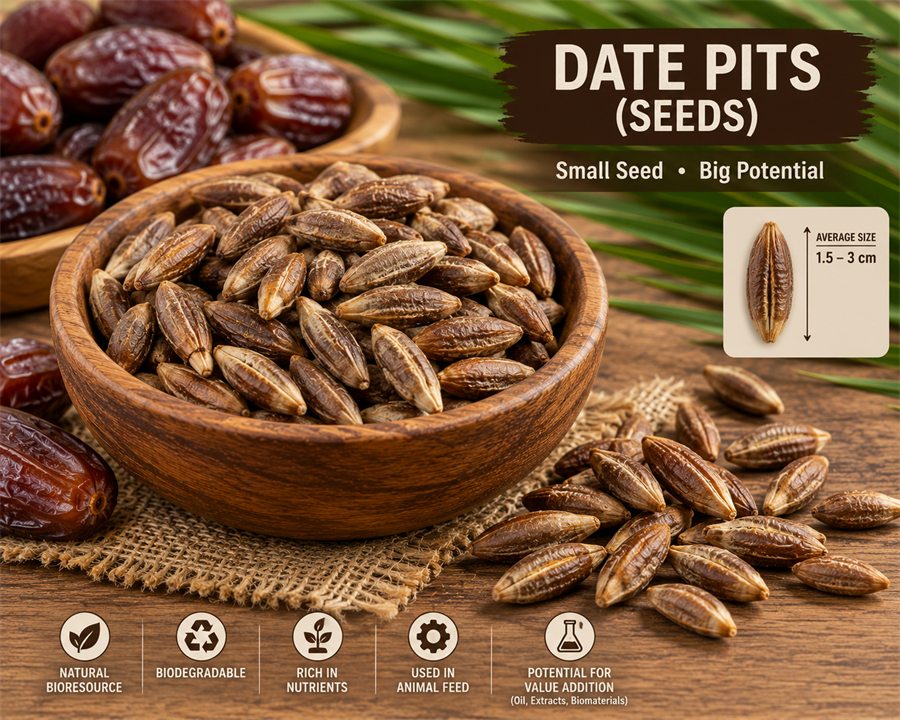 By-product 06
Around a tenth of fruit weight. Washed and dried, then roasted and ground into a caffeine-free brew, cold-pressed for seed oil, or milled into a feed and cosmetic ingredient.
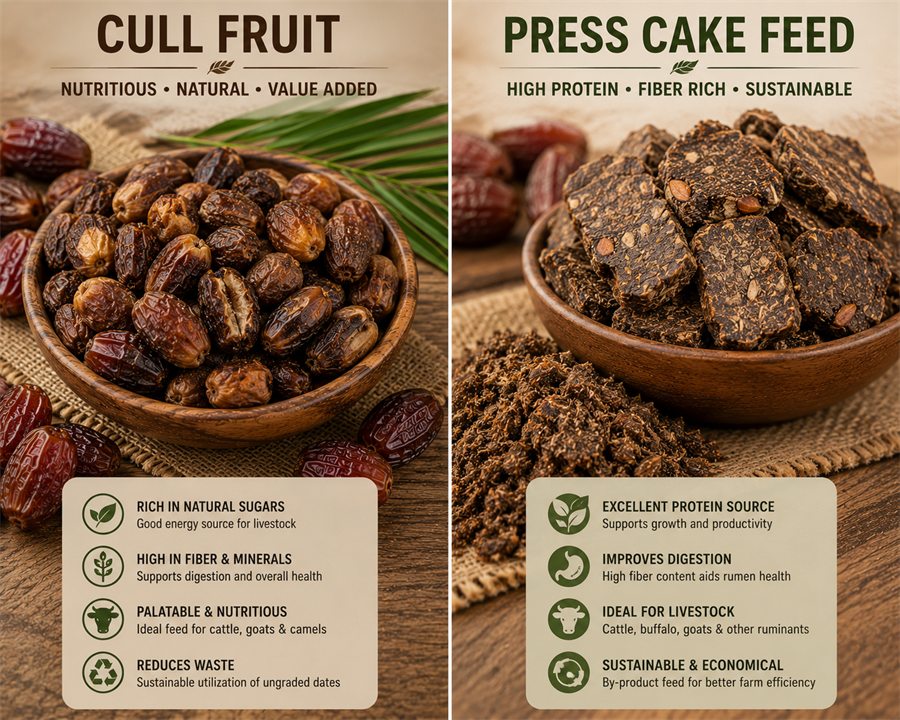 By-product 07
Split, sunburnt and insect-marked fruit, plus the cake left after syrup extraction, dried and blended into ration. High in sugar, so it goes in as an energy component.
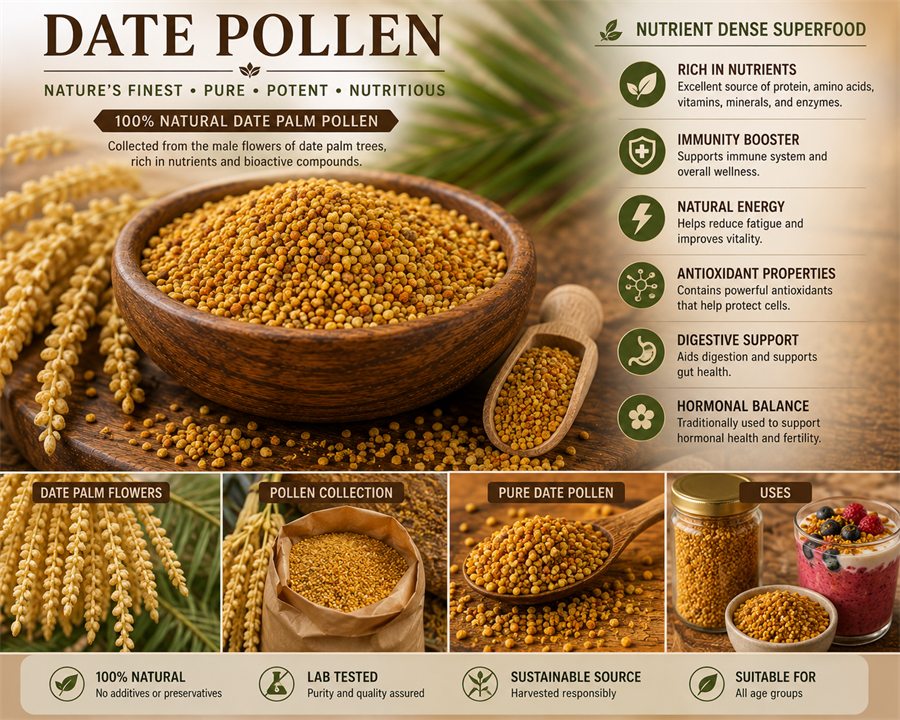 By-product 08
Surplus pollen from our male palms, collected on cloth, sieved, dried and cold-stored. Sold to other date growers for the pollination window, and as a supplement ingredient.
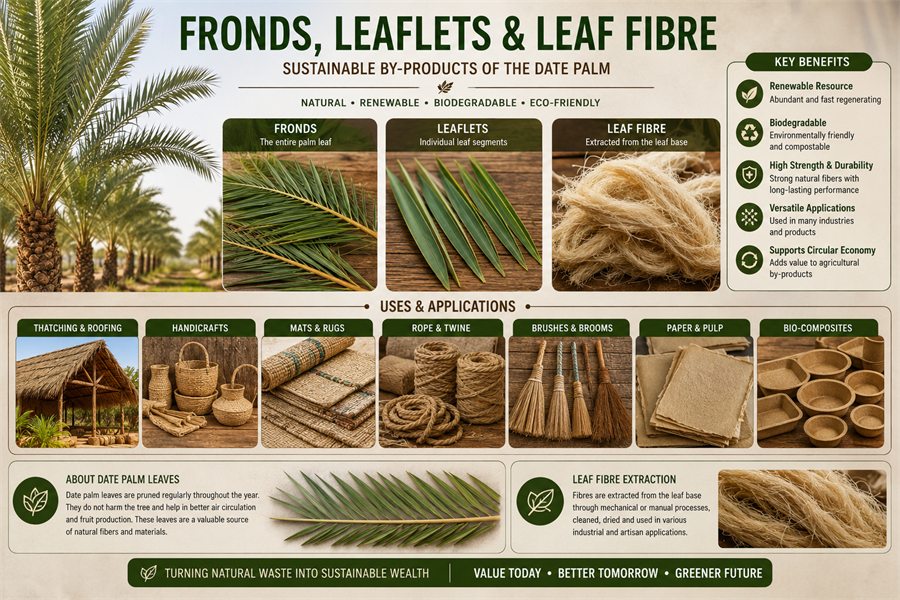 By-product 09
Twelve to fifteen fronds come off each palm every year. Leaflets are woven into mats, baskets and crates; the fibrous sheath at the leaf base is combed out for rope, brush fibre and erosion matting.
| Parameter | Fresh dates (khalal) | Soft cured dates | Dry dates (chhuhara) |
|---|---|---|---|
| Moisture | 50–55% | 18–22% | 8–12% |
| Total sugars (dry basis) | 60–65% | 70–80% | 75–82% |
| Fruit weight | 8–12 g | 7–10 g | 5–7 g |
| Blemished / split fruit | 3% max | 4% max | 5% max |
| Packing | 2 & 5 kg CFB, or on the strand | 500 g – 5 kg vacuum / MAP | 10 kg cartons |
| Storage | 0–2 °C, 4–6 weeks | 4–8 °C, 9–12 months | Ambient, 12 months |
| Testing per lot | Moisture, total sugars, yeast & mould count, pesticide residue | ||
Tell us the grade, the stage and the delivery window — the fresh season is short, and allocation is confirmed before the first pass is cut.