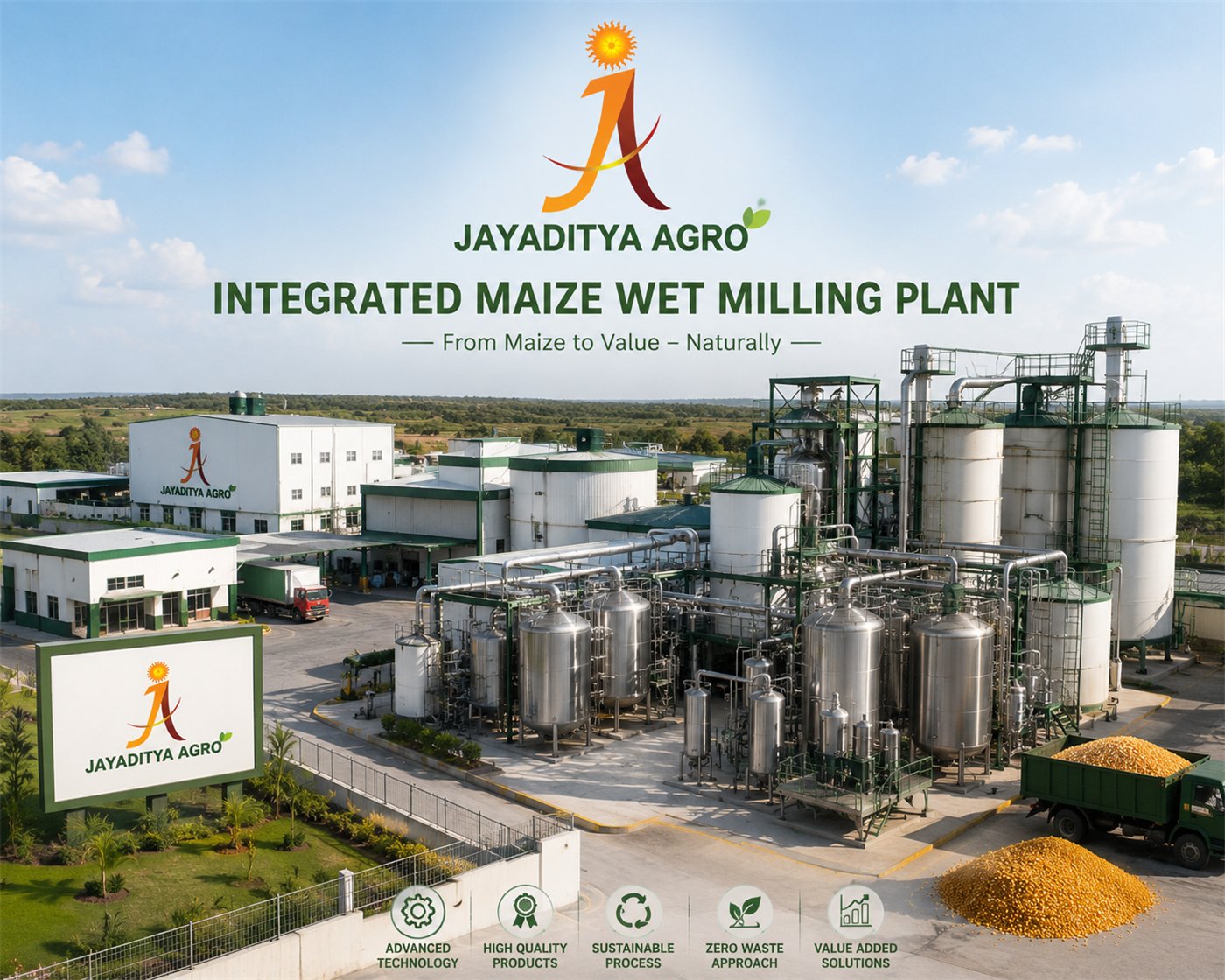
Jayaditya Agro cultivates corn, Napier grass and date palm across 600 acres in Andhra Pradesh — and takes all three crops the whole way, from seed to grain, starch, silage, biomass and dates. Nothing leaves the farm as waste.
A ₹300 Crore integrated 600 TPD wet milling plant in Kurnool, Andhra Pradesh — converting every fraction of the kernel into starch, glucose, dextrose, gluten, germ and fibre.
160 acres of Super Napier and CO‑5 hybrid fodder, cut 7–8 times a year — processed into chopped green fodder, silage, TMR blocks, biomass pellets and biogas feedstock.
180 acres of Barhi and Medjool date palm on drip — hand-pollinated, bagged and cut in passes, then finished as fresh dates, chhuhara, paste, syrup, seed powder and frond fibre.
To run a zero-waste farm system where every tonne of biomass we grow leaves the gate as food, feed, fuel or fertiliser — and to make that model repeatable for the farmers around us.
Consistent, traceable supply of maize grain, starch feedstock and green fodder — grown under measured inputs, harvested at the right moisture, and delivered on schedule.
Every lot is checked for moisture, foreign matter, broken grain and aflatoxin before dispatch. Fodder lots carry dry-matter and crude-protein readings from our in-house lab.
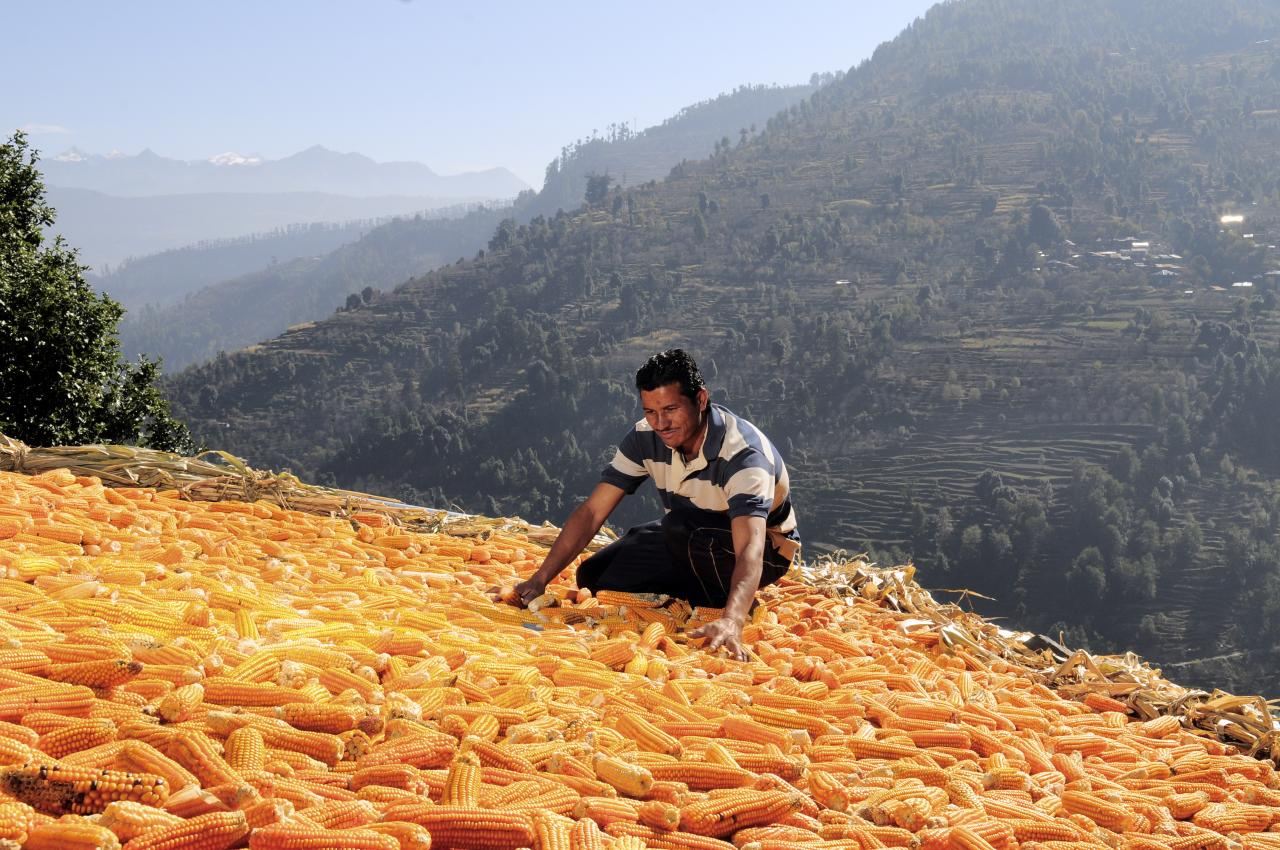
Jayaditya Agro began in 2016 with 40 acres of rainfed maize. Today we farm 600 acres across three deliberately chosen crops: corn, which gives us grain and a full wet-milling by-product stream; Napier grass, a perennial that holds the soil, uses the off-season and turns our organic residue back into fodder; and a dates garden on the arid blocks, where nothing else would pay.
The verticals feed each other. Corn stover and cob waste go into the fodder line; Napier residue, dairy slurry and shredded date fronds go back to the maize blocks as compost. It is a closed loop that keeps our input cost per acre roughly 18% below the district average.
Grain is cleaned, destoned and graded on a single line, so moisture and broken-grain percentages hold across the whole consignment — not just the top of the bag.
Selling the by-product streams instead of dumping them lets us price the primary grain and fodder keenly, and hold that price through the season.
Every bag carries a block code. We can tell you which field, which sowing date and which irrigation schedule produced it.
Napier in rotation, residue returned as compost, and drip fertigation have lifted our soil organic carbon from 0.42% to 0.71% in six years.
Own weighbridge and loading yard, with 16–22 MT trucks despatched within 48 hours of a confirmed order.
180+ contract growers give us the volume to serve large buyers without compromising on the agronomy we control.
Grain, fodder, silage or by-product streams — send the quantity and delivery window and we will come back with availability and a landed price.
8-2-293/82/JIII, Plot No. 362,
Road No. 80, Phase 3, Jubilee Hills,
Hyderabad 500033
Corn and Napier in the Krishna–Godavari belt; the dates garden on the arid Rayalaseema blocks. Andhra Pradesh. Visits by prior appointment.